
Credit-Risk-Trends-and-Analytics

Credit Risk Trends and Analytics Series

Ensure Profitability in Times of Uncertainty

Watch On-Demand Now

With the onset of uncertain times, lenders need to be extra cautious as delinquencies and default rates tend to increase in a recession. Safeguarding your portfolio from such economic shocks should be your top priority. That means you require a thorough data-driven approach for credit risk assessment. Then your credit-decision model should be the reflection of the same and needs to be continually fine-tuned.

Altair, with deep credit risk expertise, brings Credit Risk Trends and Analytics, a three-part webinar series on credit risk analytics with a focus on the pain points of developing models that reflect the driving economics.

In this 3-part webinar series, we cover:

Data Quality and Economic Impact: High-quality data is emphasized for effective credit risk modeling, recognizing its crucial role in model accuracy and understanding the impact of economic downturns on credit risk model outcomes is highlighted.

Machine Learning vs. Econometric Regression: Machine learning strengths and weaknesses are explored in comparison to econometric regression techniques.

Predictive Abilities: Ability to predict defaults, payoffs, loss rates, and exposures using machine learning techniques.

Efficient Model Validation: Efficient model validation techniques involving the comparison of various strategies are discussed.

Visualization and Communication: The importance of visualizing and effectively communicating model outputs, covering stability, discrimination, and calibration, is underscored.

Transform your financial strategy.

Access All the Recordings

Credit Risk Analytics Series


Data Preparation for Income and Expense Shocks

In this webinar on data preparation for income and expense shocks, discover how to build credit risk models using machine learning and assess their sensitivity to economic downturns. Gain insights into the pitfalls and advantages of machine learning versus econometric regression. Acquire skills to predict defaults, payoffs, loss rates, and exposures and efficiently validate credit risk models. Explore methods for building user-friendly interfaces, comparing model outputs, and effectively communicating results in terms of stability, discrimination, and calibration.


Build Modern Credit Risk Models using Machine Learning

In this webinar on building modern credit-risk models using machine learning, participants will gain the skills to construct models that account for economic downturns with the right data. Understand the nuances between machine learning and econometric regression, enabling effective prediction of defaults, payoffs, loss rates, and exposures. Learn efficient techniques for validating credit risk models, comparing diverse validation strategies, and building user-friendly interfaces. Enhance your ability to interpret model outputs in terms of stability, discrimination, and calibration for effective communication.


Visualise and Validate Credit Risk Models

In this webinar, you will gain expertise in the efficient validation of credit risk models. The session covers the comparison and interpretation of diverse validation strategies, allowing for a nuanced understanding of model outputs in terms of stability, discrimination, and calibration. Additionally, participants will learn visualization techniques to enhance the efficient communication of model performance.

Speakers

Harald Scheule (1)

Harald Scheule

Professor of Finance

University of Technology, Sydney

Professor Harald is a strategic partner for banks and regulators in Asia, Australia, Europe, and North America. He is a specialist in Banking, Credit and Liquidity Risk, Housing Finance, and Machine Learning. He has had influence with financial institutions that have applied his work to improve their risk management practices. He currently serves on the editorial board of the Journal of Risk Model Validation. Harry is a dedicated educator, who consistently receives excellent student feedback, and his PhD students have produced impactful industry research. Harry's textbooks on credit risk analytics are used around the world in data analytics courses.
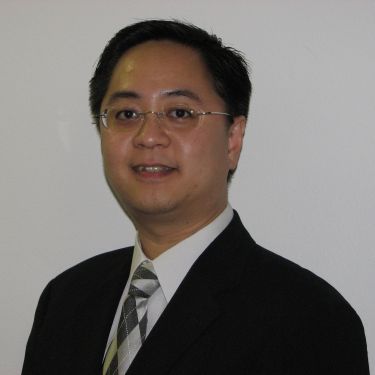
Clinton Chee

Dr. Clinton Chee

Solutions Specialist/Data Scientist

Altair

PhD in Shape Control of Smart Structures in the Aeronautical Engineering Department at the University of Sydney. Degrees in Mechanical Engineering and Science (Maths/Physics) at the University of Melbourne. Clinton has been working in scientific computing/programming, including modifying programs to run on supercomputers, developing web-based software for e-research, and working as a quantitative analyst at Australia's No.1 bank. There, he re-coded the Operational Risk models, which took a week to run down to a few hours.

Master credit risk models and machine learning for resilient decision-making.

Watch Now